Governments must act now to close the mill, clean the water, compensate the people
For six decades, the people of Grassy Narrows (Asubpeeschoseewagong) First Nation have suffered through a deadly mercury poisoning crisis, the result of nine tons of mercury that was dumped upstream from their territory by the Dryden pulp and paper mill in the 1960s.
Mercury levels in the Wabigoon River have remained dangerously high ever since, with no notable decrease since the 1980s. The toxin has contaminated the river’s fish supply, a key source of food for the community, and can be passed from mothers to babies. This has created a crisis which spans generations, with an estimated 90 percent of the people of Grassy Narrows suffering from mercury poisoning. Since mercury bioaccumulates over time, the effects of the poisoning will continue for several generations even after full restoration and clean up.
Decades of government denial, neglect and pandering to corporations have only worsened the situation. In 1975, the Ontario Minister of Natural Resources declared that the mercury dumping has caused “no real damages” to the First Nations peoples. In 1984, the provincial environment minister said that the Wabigoon River was cleaning itself, and insisted there was no need for the government to intervene.
A year later, the Ontario government did see the need to intervene – but on behalf of the Dryden mill, whom it indemnified along with all future owners against claims relating to the mercury poisoning. This action was specifically to protect the corporation from litigation brought against the mill by the Grassy Narrows and Islington First Nations, seeking compensation for damages from the contamination.
The provincial government has continued to grant clearcutting licenses to forestry monopolies and allow the Dryden mill to pollute the river with emissions including sulfate which generates the highly poisonous methylmercury.
Furthermore, the federal and provincial governments are fast-tracking their economic development priorities – which include AI data centres, critical minerals mining, and a proposed nuclear waste disposal site upstream from Grassy Narrows – which further places corporate interests ahead of Indigenous rights and escalates the threats to Indigenous land and resources, including water.
Six decades of struggle
While the past six decades have been a period of suffering for the people of Grassy Narrows, they have also been a period of struggle to be properly compensated for the mercury crisis, to regain their self-determination and control over their traditional territory, and to recover and restore their culture.
Utilizing a range of tactics ranging including letter-writing and petitions, meetings and speaking tours, legal efforts, protests and direct action, they have won important victories. Among the successes are a ban on logging on their territory for the next decade and government commitments to clean the river and build a Mercury Care Home. Their struggle includes the longest-running blockade in Canadian history, beginning in December 2002, to block the logging road and stop logging on their land.
The fight also includes the regular River Run, a massive grassroots effort during which Elders, leaders and community members travel 1,700 km from Grassy Narrows to Toronto, to demand action and justice. On September 23, they will be joined by allies and supporters in calling on the Ontario and federal governments to:
- Compensate everyone in Grassy Narrows fairly for the mercury crisis.
- End the pollution by stopping the Dryden Mill and ending mining and nuclear waste plans that threaten Grassy Narrows.
- Support Grassy Narrows in restoring their community and way of life from the damage that mercury has done.
The Communist Party of Canada (Ontario) stands with the people of Grassy Narrows in this struggle. We support their just demands and reiterate our call for governments at all levels to immediately adopt legislation and policies which fully implement the United Nations Declaration on the Rights of Indigenous Peoples (UNDRIP) including the right to free, prior and informed consent.
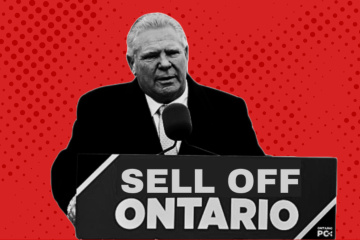
At a time when Doug Ford and Mark Carney are using “divide and conquer” tactics to facilitate state and corporate encroachment on Indigenous land and theft of resources, the struggle of the people of Grassy Narrows stands as an example of the degree of unity and solidarity to confront and defeat colonialism and capitalism.
Justice for Grassy Narrows!
Provincial Executive Committee, Communist Party of Canada (Ontario)